Fire Alarm Monitoring Aurora CO: Understanding Cellular, Phone Line, and Staffed Monitoring Options
If you manage a commercial building in Aurora, one of the most practical fire protection decisions you will make has nothing to do with paint color, tenant finish, or even the brand of panel on the wall. It is the question of how alarm signals leave the building when something goes wrong.
That sounds simple until you are in the middle of a remodel, a tenant improvement, or a failing annual test and somebody asks whether your system can report by cellular, by phone line, or through a continuously staffed location. At that point, the answer is no longer abstract. It affects permit approval, operating cost, reliability, and how much risk you are carrying during an actual emergency.
I have seen this become a sticking point in all kinds of facilities, small offices, mixed use properties, warehouses, schools, and kitchens with suppression systems tied into the alarm. Owners often assume the alarm panel itself is the system. In practice, the panel is only one piece. Notification appliances, initiating devices, supervision, transmission path, and ongoing inspection all have to work together. A beautiful panel upgrade means very little if the signal path is weak, obsolete, or not accepted for the occupancy.
That is where fire alarm monitoring Aurora CO conversations tend to get real. The monitoring method is not just a telecom choice. It is part of the life safety strategy.
What monitoring actually does
A fire alarm system detects an event and then sends information to the people who need it. Some of that is local, strobes, horns, voice messages, annunciators. Some of it goes off site. Off site reporting is the part most owners mean when they say monitoring.
In broad terms, a monitored system can send a fire alarm signal, a trouble signal, and often supervisory signals to another location for action. Depending on the application and the local authority having jurisdiction, that receiving point may be a central station, a commercial monitoring service, or a continuously staffed monitoring service. In some occupancies and system types, that distinction matters.
NFPA 72 covers fire alarm and signaling system design, inspection, testing, and maintenance, including monitoring and emergency communications functions. That matters because monitoring is not a side feature. It is baked into how the whole signaling system is intended to perform.
In the field, the question usually turns into this: when the panel has something urgent to report at 2:13 a.m. In January, how dependable is the path out of the building, and who receives it?
Why owners still ask about phone lines
Phone line monitoring has been around for a long time, and many older buildings still have it in place. If you have inherited a property with an existing dialer tied to traditional telephone service, it can feel familiar and cheap to leave it alone. Familiar is not the same as dependable.
The real issue is not nostalgia. It is whether the building still has the type of service the communicator expects, whether that service is being maintained, and whether the system remains acceptable for the use and local requirements. A surprising number of owners do not realize the line they think protects the building was changed years ago during a telecom upgrade, or that the service quality has drifted enough to create communication failures and nuisance trouble conditions.
I have walked into buildings where the alarm company kept getting intermittent failures, but the root problem had nothing to do with the fire alarm detectors and panels Denver contractors had installed years earlier. The issue was the communications path, modified by an unrelated IT decision. Someone replaced old service, rerouted circuits, or consolidated vendors, and the alarm communicator started living on borrowed time.
Phone line paths can still come up in existing installations, but they deserve a hard look, especially if the building has had tenant changes, telecom changes, or a recent history of communication troubles.
Why cellular has become the first option people ask for
Cellular monitoring gets attention because it usually avoids many of the headaches that come with aging line infrastructure. If the building has a properly installed communicator and signal conditions are adequate, it can provide a more modern path for alarm transmission without depending on legacy phone service in the same way.
That does not mean cellular is automatically perfect. It still needs correct programming, acceptable signal strength, power support, and compatibility with the panel and monitoring arrangement. Basement telecom rooms, mechanical penthouses, and shielded construction can complicate things. New construction with a lot of metal, concrete, and energy efficient assemblies can create dead spots where owners least expect them.
Still, in many projects, cellular becomes attractive because it reduces dependence on telephone infrastructure that owners are already trying to eliminate. It also tends to fit how buildings are managed now. Many property managers no longer want to maintain separate old style communication services just to keep an alarm communicator alive.
For a lot of fire alarm monitoring Aurora CO projects, the conversation starts with cost and ends with reliability. Cellular often wins that discussion because it can be simpler to support over time, especially when the alternative is preserving outdated telecom pathways no one else in the building wants.
The staffed monitoring option is different in kind, not just in price
A continuously staffed monitoring service is often misunderstood. Owners sometimes hear the phrase and think it means any place where somebody is on site around the clock. That is too casual a definition to be safe. The staffed location has to function in a way that supports the fire alarm reporting requirement for that application, and acceptance is not something to assume.
In practice, this option shows up in campuses, healthcare environments, larger institutional properties, or facilities with established security or operations centers. It can make sense when the building or site already has trained staff, documented procedures, and a clear chain of response. It can also create a false sense of security if the staffing model looks good on paper but breaks down during shift change, vacations, or after hours distractions.
I have seen facilities where the operators were excellent. They knew the difference between alarm, supervisory, and trouble. They knew when a sprinkler valve tamper needed immediate follow up and when a duct detector trouble meant service was required but not panic. I have also seen properties where a desk was technically staffed 24 hours a day, but the fire alarm signals were not truly being managed with the discipline the system deserved.
That distinction matters because once you rely on staffed monitoring, your procedures become part of the protection strategy. Technology alone does not carry the whole burden.
Choosing among the three without guessing
The right choice depends on the building, the occupancy, the local authority, and the condition of the existing system. It also depends on the owner’s tolerance for future maintenance headaches.
Here is the most useful way to frame it:
- phone line monitoring may remain part of older installations, but it deserves scrutiny if telecom service has changed or reliability is inconsistent
- cellular monitoring often appeals to owners who want a modern signal path without maintaining legacy phone service
- continuously staffed monitoring can work where trained personnel and accepted procedures are truly in place
- the local authority having jurisdiction may determine what type of transmission or receiving arrangement is acceptable for a given application
- the cheapest monthly option is not always the least expensive over five years if it causes recurring trouble calls or replacement work
That last point is worth sitting with for a moment. Building owners sometimes focus hard on monthly monitoring fees and ignore service calls, failed tests, permit delays, and tenant disruption. A system that limps through every annual test is not saving money. It is slowly billing you in another format.
Local code reality matters more than generic advice
This is where many online articles get sloppy. They talk as if one rule applies everywhere. It does not.
Denver adopts the International Code Council suite of codes with local amendments, and those amendments can affect fire and building requirements. Denver also has code language dealing with problematic fire alarm systems and repeated unintentional false alarms, including repair or replacement in some circumstances and reimbursement for certain responses. That is a useful reminder for anyone along the Front Range: local adoption and enforcement details matter.
Aurora projects should be reviewed against the requirements of the local authority having jurisdiction, not against a generic national summary and not against assumptions borrowed from another city. Even within the Denver metro area, details can differ enough to affect design decisions, acceptance testing, and the required monitoring arrangement.
If you are planning a system replacement, tenant improvement, or change of use, confirm expectations early. Waiting until the end of a project to sort out signaling and monitoring is one of the easiest ways to lose time and money.
Monitoring is connected to the rest of the fire protection system
Owners sometimes isolate fire alarm monitoring from everything else in the building. That is understandable, but it is not how the systems behave in real life. Fire alarm reporting often interacts with sprinkler supervision, suppression systems, and specialty hazard protection.
A warehouse with a dry pipe sprinkler system Colorado owners rely on for cold weather areas may generate supervisory conditions very differently from a simple office suite. A facility with sprinkler freeze protection Colorado concerns will often have more to think about than basic smoke detection. A lab or data room protected by clean agent fire suppression Colorado systems may have release logic and shutdown functions that need careful coordination. A restaurant with commercial kitchen fire suppression Denver style protections tied into hood suppression and alarm reporting has its own set of operating realities.
Even without getting into design specifics, one thing stays true: the monitoring path has to support the actual protection systems in the building. If the building has waterflow switches, valve tampers, suppression releasing functions, or emergency communication features, the communication method cannot be treated as an afterthought.
The same goes for buildings with a pre action sprinkler system Denver contractors may install in more sensitive environments. Preaction arrangements are chosen for reasons that usually involve risk management, asset protection, or accidental discharge concerns. If a building owner takes great care selecting that kind of sprinkler strategy, it makes little sense to be casual about how alarm and supervisory conditions are transmitted off site.
False alarms are not a side issue
Repeated false alarms wear everyone out. Tenants stop taking signals seriously. Staff start guessing before they act. Service costs rise. Local fire agencies may respond with increasing frustration, and local code enforcement may do the same.
That is not theoretical. Denver’s local amendments address false alarms and problematic systems. The lesson travels well across the region: if your system has recurring unintentional activations, communication failures, or chronic trouble conditions, you should treat it as a management problem, not a nuisance.
When owners complain about fire alarm false alarms Denver technicians often discover a combination of causes rather than one dramatic failure. Dirty devices, poor detector placement, neglected maintenance, construction dust, vibration, temperature swings, and communication issues can all contribute. Sometimes a monitoring path problem creates repeated trouble signals that staff start ignoring. Then, when a real event occurs, confidence is already low.
A stable system begins with proper design and good equipment, but it stays stable through testing, maintenance, and disciplined repairs. Monitoring should help you respond to issues early, not bury you in noise.
Testing and inspection tell you whether your monitoring choice is working
NFPA 72 fire alarm testing Denver property managers schedule each year is not just a compliance exercise. It is a stress test for assumptions. It answers the uncomfortable but useful question: does the system still perform the way everyone thinks it does?
The same principle applies on the sprinkler side. NFPA 25 inspection Colorado requirements exist because water based fire protection systems need regular inspection, testing, and maintenance. NFPA 25 sets minimum frequencies for many tasks, and those tasks can fall on monthly, quarterly, semiannual, annual, and multi year intervals. That means your service calendar should not be casual. It should be built intentionally.
The monitoring side and the sprinkler side meet in the middle more often than owners expect. Waterflow alarms, valve supervisory devices, low air conditions on dry systems, and other signals can all depend on reliable alarm transmission. If the communicator is unstable, your fire protection program is weaker than your https://denveremergencyplanning465.clarionvale.com/posts/tenant-improvement-fire-protection-denver-how-remodel-plans-can-affect-permits-reviews-and-project-scope paperwork suggests.
This is one reason the fire sprinkler inspection frequency Colorado owners ask about should be part of the same planning conversation as alarm monitoring. Separate vendors may handle different parts, but the owner needs one clear picture of the whole system.
What a solid review usually covers
When I sit down with an owner or property manager to sort out monitoring options, the best conversations are not about sales brochures. They are about the building itself.
A useful review usually looks at these points:
- what the occupancy is and whether the local authority requires a particular receiving arrangement
- whether the existing panel and communicator are still suitable and supported
- whether sprinkler supervision, suppression systems, or other life safety functions report through the same path
- whether the building has a history of false alarms, communication troubles, or failed tests
- whether future renovations, tenant changes, or telecom changes are likely to make the current setup obsolete
That last point matters more than people think. I have seen owners spend money preserving an arrangement that was destined to be ripped out during the next lease cycle. If a building is heading toward modernization, it is often smarter to choose a monitoring path that aligns with the next five to ten years, not the last ten.
A few common building scenarios
Take a lightly occupied office building with an older panel and legacy telephone reporting. If the owner has already upgraded internet and voice service twice, and the building keeps seeing communication troubles, that is a strong sign to review cellular or another accepted arrangement. The recurring service calls usually cost more than people admit.
Now consider a cold storage or loading area where a dry pipe sprinkler system Colorado weather makes necessary. The sprinkler system itself may be the driver of the monitoring discussion because supervisory and alarm conditions need dependable transmission, especially during winter when sprinkler freeze protection Colorado concerns are front and center. In that type of environment, communications reliability and maintenance discipline matter a lot.
A third case might be a commercial kitchen. The owner may be focused on grease duct cleaning and hood work, but the alarm integration can be just as important. Commercial kitchen fire suppression Denver projects often involve coordination between suppression equipment, alarm interfaces, and whoever receives the signal. If one contractor assumes another party handled the communication path, problems show up late, often during testing.
Then there are higher value spaces, server rooms, archives, specialty manufacturing, where clean agent fire suppression Colorado systems or preaction arrangements may be part of the protection strategy. In those spaces, the owner usually understands asset risk very well. Yet even there, monitoring can be overlooked because it feels less tangible than a cylinder bank or a valve assembly.
Documentation and certification are part of the job
No owner enjoys paperwork, but fire system certification Denver area projects often turns on documentation being accurate, current, and coordinated. If the panel, communicator, supervising station arrangement, and testing records do not match reality, acceptance and renewals get harder.
The same thing comes up during a fire safety inspection Lakewood CO or elsewhere in the metro area. The local inspector is not there to admire your intentions. They are verifying that the installed system, the records, and the actual operation line up. Monitoring details that were fuzzy during design have a habit of becoming very sharp during inspection.
That is why it helps to keep one accessible record set that shows the current communicator method, responsible parties, test dates, service findings, and any impairments or deficiencies that remain unresolved. It sounds basic, but buildings with clean records usually have fewer last minute fire protection surprises.
The cheapest answer often becomes the most expensive lesson
I understand why owners look for the least costly path. Budgets are real, and not every property can absorb a broad system upgrade on demand. But with fire alarm monitoring, cutting corners tends to show up later as repeated service calls, failed inspections, tenant complaints, and mounting frustration.
A better mindset is to ask which option gives the building the best chance of passing required testing consistently, operating with fewer communication faults, and staying aligned with local expectations as the property changes. Sometimes that points to cellular. Sometimes a staffed arrangement makes sense. Sometimes an existing phone line setup can remain for the moment, but only with eyes open and a transition plan.
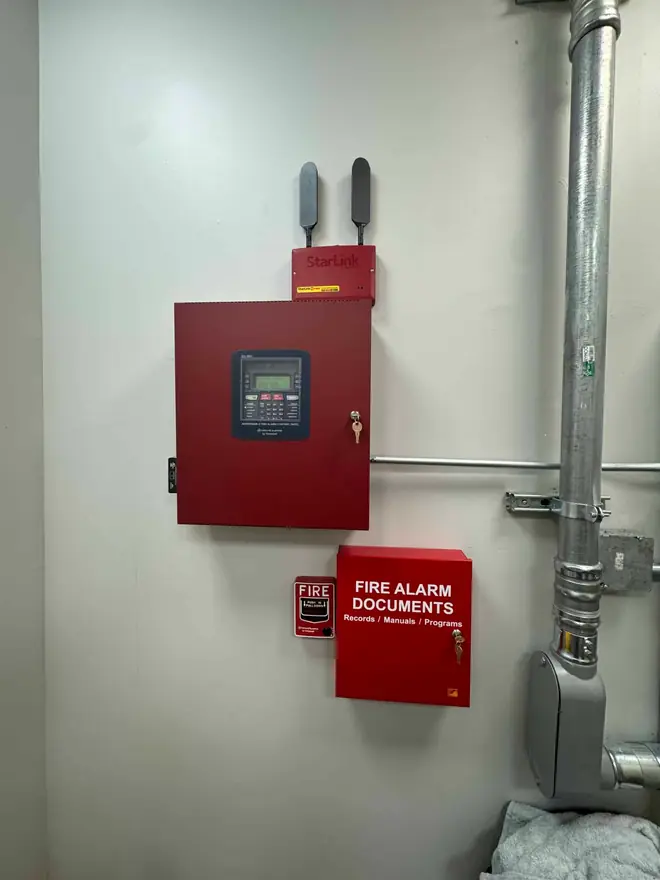
The important thing is not to treat monitoring as a checkbox. It is part of the system’s ability to do its job when nobody is expecting trouble.
For owners and managers dealing with fire alarm monitoring Aurora CO decisions, that is the practical takeaway. Start with the building’s actual risks, confirm what the local authority having jurisdiction expects, look honestly at the age and performance of the current setup, and choose a path you can maintain without constant improvisation. A reliable signal path is not flashy. It rarely gets praise when everything is quiet. But when the building needs it, nothing about it is secondary.