Fire Sprinkler Inspection Frequency Colorado: What Is Often Checked Monthly, Quarterly, and Annually
If you manage a commercial building in Colorado, the phrase fire sprinkler inspection frequency Colorado usually comes up right after a failed inspection, a tenant complaint, or a surprise question from insurance. Most owners do not ignore these systems on purpose. They get busy. The building runs fine for months. Nothing leaks. No alarms sound. Then someone asks for records, or a valve is found closed, or a dry system room drops below the temperature it should hold, and now a routine matter turns into a rushed one.
That is the real value of understanding inspection frequency. It is not paperwork for its own sake. It is a way to catch the quiet problems before they become expensive, disruptive, or dangerous.
In Colorado, and especially along the Front Range, inspection planning also has a practical wrinkle that people outside the region sometimes miss. Weather matters. A wet system in a heated office building has a different risk profile than a dry pipe sprinkler system Colorado facility protecting an unheated loading area. A high-rise with monitored alarms and multiple risers needs a different service rhythm than a small retail space. Denver also adopts model codes with local amendments, so the code path for one jurisdiction may not line up perfectly with the next. That is why building owners should always confirm project requirements with the local fire marshal or authority having jurisdiction.
What follows is a practical look at what is often checked monthly, quarterly, and annually, and why those intervals matter.
The schedule is not just monthly, quarterly, and annual
A lot of people assume sprinkler care falls into three buckets and that is the whole story. It rarely is. NFPA 25 is the main standard for inspection, testing, and maintenance of water-based fire protection systems, and it sets minimum frequencies for many tasks. Some items are looked at monthly, some quarterly, some annually, and others on semiannual or multi-year cycles. That matters because a building can seem current while still missing major required work that falls outside the basic yearly visit.
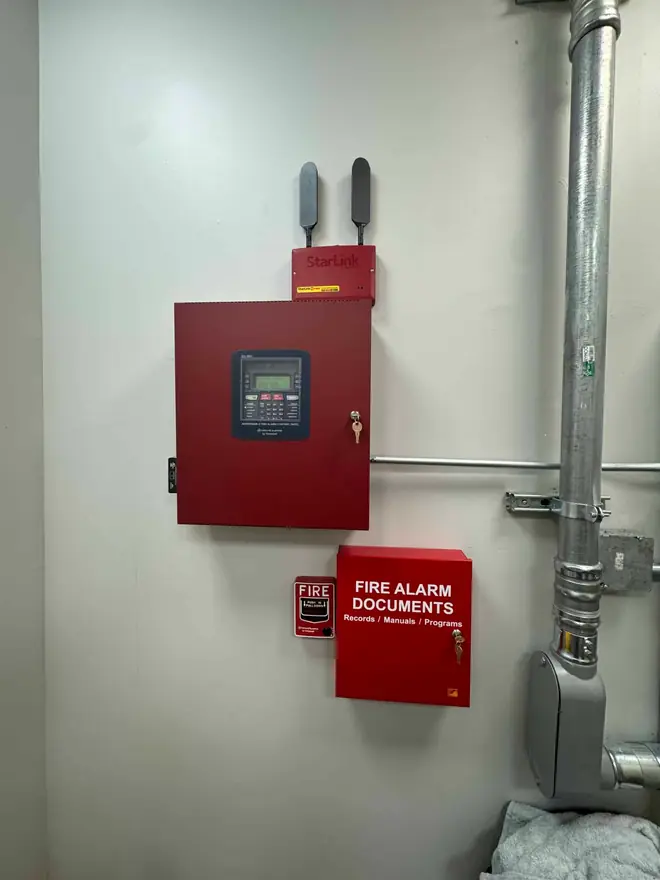
Still, the monthly, quarterly, and annual checkpoints are the backbone of most service calendars. They are where recurring issues tend to show up first. If those three intervals are handled consistently, the larger schedule becomes much easier to manage.
A good example is a facility with a pre action sprinkler system Denver data room, standard wet pipe protection in office areas, and a kitchen line protected by commercial kitchen fire suppression Denver equipment. Those systems do not all behave the same way, and they are not all governed by the exact same inspection and testing routines. Owners who lump everything together under one vague “fire inspection” often miss that distinction. The smarter approach is to build one calendar with separate tracks for sprinkler, alarm, and special hazard systems.
What a monthly sprinkler inspection often focuses on
Monthly work is usually visual and practical. The point is to verify that the system appears ready to operate and that no obvious impairment has crept in since the last visit. In my experience, this is where the simplest mistakes show up: a control valve that was shut during other work and never reopened, a gauge that looks wrong, storage stacked too close to sprinkler heads, or damage in a riser room that nobody reported.
Monthly checks often focus on a short set of basic conditions:
- control valves appear in the correct position
- gauges show normal conditions for the system
- sprinkler heads are not visibly damaged, painted, or obstructed
- riser rooms and related equipment areas remain accessible
- signs of leakage, corrosion, or physical damage are not present
That may sound basic, but these are exactly the kinds of problems that create bigger failures later. A closed valve can leave a whole part of a building unprotected. A leaking fitting in winter can turn into a freeze problem. A blocked sprinkler under a new storage arrangement can reduce actual protection where it is needed most.
Colorado facilities often run into storage and temperature issues. Warehouses and back-of-house areas evolve quickly. Someone adds pallets, cartons, or seasonal inventory, and before long deflector clearances are no longer what they were. In colder parts of a building, the more relevant concern is sprinkler freeze protection Colorado conditions. If a space is supposed to stay heated to support a wet system, even a brief heating failure can create a serious problem. In loading docks, canopies, attic-like voids, and exposed service areas, those monthly visual checks are not trivial. They are often the first chance to notice that the protection strategy no longer matches the space conditions.
For dry systems, monthly observations can be especially valuable. A dry pipe sprinkler system Colorado installation depends on maintaining proper air or gas pressure in the piping and keeping the equipment environment suitable. If a gauge is drifting, if condensate handling is poor, or if the valve enclosure is too cold, the issue may not announce itself dramatically at first. It may just sit there waiting for the wrong night of weather.
Why quarterly checks tend to go deeper
Quarterly inspections often add another layer. Instead of simply asking whether the system looks normal, the quarterly interval is where service providers are more likely to verify operating conditions and review components that should not be left unchecked for long stretches.
Different systems and components can have different requirements, and local expectations can vary, but quarterly attention commonly centers on the health of the riser assembly, waterflow-related components, valve supervision conditions, and items that help prove the sprinkler system and the alarm side are still communicating as intended.
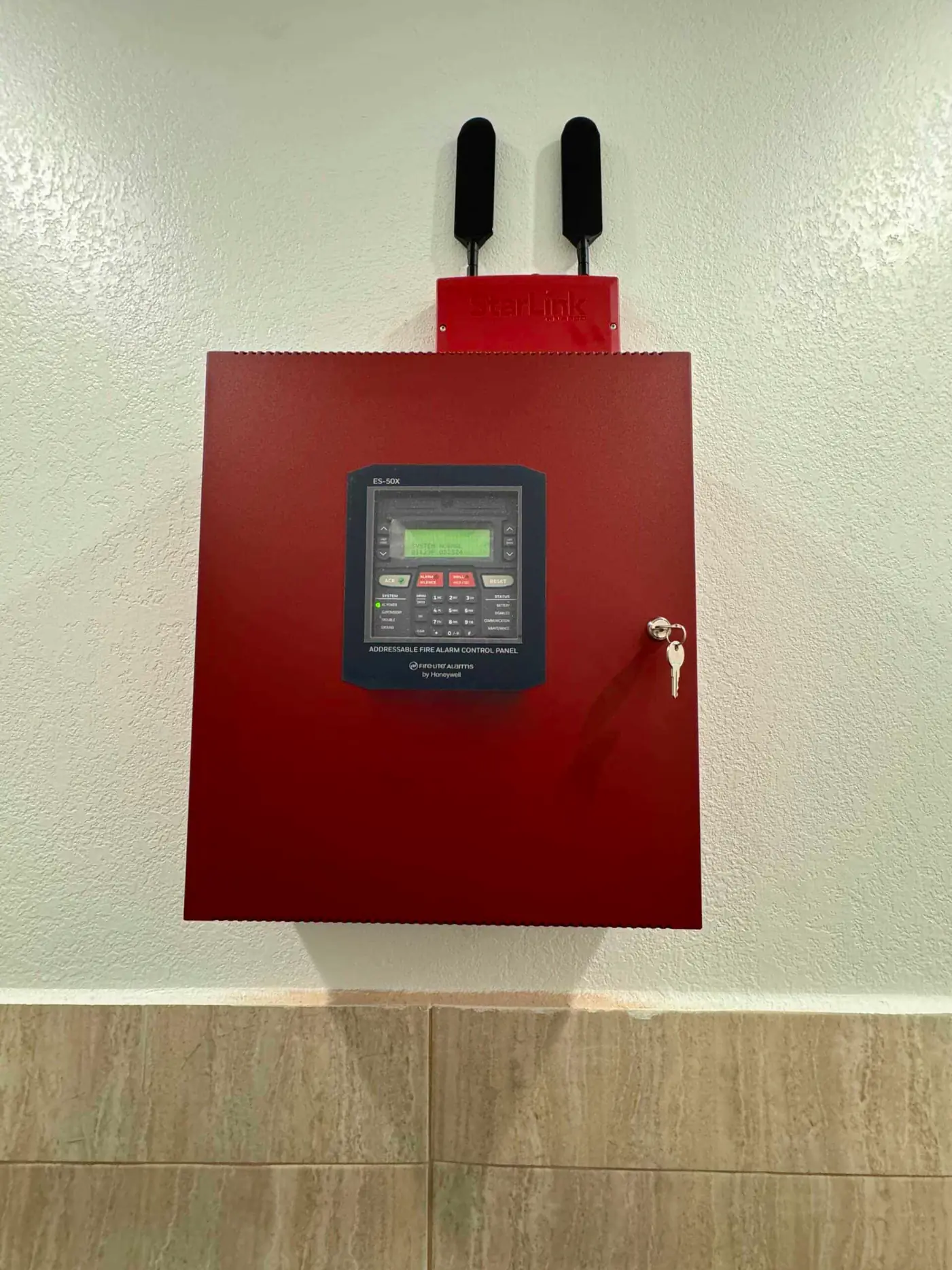
This is also the point where sprinkler and alarm coordination becomes more visible. A sprinkler system does not live in isolation. In many commercial buildings, a waterflow event, supervisory condition, or tamper condition has to report through fire alarm detectors and panels Denver facilities rely on to notify occupants and transmit signals. NFPA 72 governs fire alarm and signaling systems, including inspection, testing, and maintenance. If the sprinkler side is current but the alarm side is not, you do not have a complete picture of readiness.
That overlap matters in real buildings. I have seen owners say their sprinkler contractor came out recently, so they assumed everything was covered. Then it turns out the valve supervisory signals were not being received properly, or the panel had unresolved troubles, or the monitoring pathway had a problem. In Denver, some fire alarm or emergency communication devices are required to transmit to a central station, commercial monitoring service, or continuously staffed monitoring service, depending on the application. So when people talk about a sprinkler inspection, it is wise to ask whether they are speaking only about the water-based equipment, or about the connected reporting chain too.
Quarterly work also tends to expose maintenance drift. A site starts with good records and clean rooms. A year later, the riser closet holds janitorial stock, a contractor has leaned material against piping, a slow leak has left scale marks, and nobody has updated the impairment log. None of that is dramatic in isolation. Taken together, it tells you the system is not getting the day-to-day respect it needs.
Annual inspections are where the bigger picture comes into focus
Annual inspections are usually the most familiar to building owners because they feel formal. They often involve more time on site, more documentation, and more interaction between the service provider, management, and sometimes the authority having jurisdiction or insurance representatives.
The annual interval is where a broader assessment tends to happen. The goal is not just to spot obvious trouble, but to evaluate whether the system, as installed and maintained, remains in a condition that supports operation. That can include sprinkler components, valves, piping conditions, alarm interfaces, records, and deficiencies that have been noted but not corrected.
An annual visit is often where stubborn issues stop hiding. A small amount of corrosion that looked cosmetic six months ago may now be a real concern. A recurring low-air issue on a dry system may show a pattern. A room that was “temporarily” repurposed may clearly no longer fit the original protection approach. A pre-action area may have operational or supervisory questions that deserve closer review. That is one reason owners with a pre action sprinkler system Denver facility cannot treat annual service like a box to check. Those systems are usually there because accidental discharge risk, freezing concerns, or asset sensitivity made system selection more complicated in the first place.
Annual work is also the right time to line up sprinkler maintenance with NFPA 72 fire alarm testing Denver properties may already be scheduling. It is often more efficient to coordinate those efforts than to treat them as unrelated trades. When sprinkler supervisory devices, waterflow functions, and alarm reporting are reviewed in a coordinated way, fewer gaps slip through. It also helps the building team keep cleaner records for audits, renewals, and fire system certification Denver documentation needs.
The Colorado factor: climate changes the conversation
Colorado is hard on fire protection systems in ways that are easy to underestimate. Freeze risk is the obvious one, but it is not the only one. Temperature swings, mechanical room conditions, tenant buildouts, and mixed occupancies all complicate inspections.
Take a simple suburban commercial building. The front office may be heated and served by a straightforward wet system. The rear warehouse may have overhead doors opening all winter, making freeze exposure much more likely. A detached or poorly heated electrical room might create concerns for nearby piping. If the owner only thinks in terms of a single annual sprinkler inspection, those differences get flattened out.
Sprinkler freeze protection Colorado planning should start long before ice forms in a pipe. It starts with system selection, room temperature control, and regular observation of spaces that are vulnerable when weather shifts. Dry systems and pre-action systems can address some freeze concerns, but they also bring their own inspection and maintenance needs. There is no free pass. The right system lowers one kind of risk fire system services in Colorado while creating other responsibilities.
That is one reason local service experience matters. A technician who spends time in Colorado buildings knows where freeze exposure tends to hide. Vestibules, loading areas, exterior walls, rooftop penthouses, service corridors near open docks, and infrequently visited utility spaces all deserve attention. The issue is not just whether the plans looked correct when the system was installed. It is whether the building still operates the way the design assumed.
Fire alarms and sprinklers should be managed together, not separately
Owners often divide vendors by trade and then wonder why problems keep slipping between them. One company handles sprinklers. Another handles alarms. A third handles kitchen suppression. Sometimes a monitoring provider is separate too, especially where fire alarm monitoring Aurora CO properties rely on has been set up through an outside station.
That structure can work, but only if someone manages the overlaps.
When a sprinkler valve changes state, or water moves where it should not, the alarm system may need to detect, display, and transmit that condition. When false signals keep happening, the consequences are more than annoyance. Denver’s fire code amendments address false alarms and problematic fire alarm systems, including repair or replacement when unintentional false alarms repeat, and reimbursement for some false alarm responses. So a pattern of fire alarm false alarms Denver property managers are brushing off can become a compliance and cost issue, not just a nuisance issue.
This is why annual and quarterly planning should include a conversation that sounds something like this: are sprinkler supervisory functions reporting correctly, are panel troubles being cleared promptly, are monitored signals reaching the required destination, and are repeated nuisance conditions being investigated instead of silenced? That is basic stewardship. It is also the practical side of keeping the building out of trouble.
A lot of owners are surprised to learn how often the problem is not equipment failure in the dramatic sense. It is unresolved small issues. A tamper switch problem that nobody prioritized. A panel trouble signal that became background noise. A door left open in a mechanical room. A heated room that quietly stopped staying warm enough overnight. Systems rarely go from perfect to failed in one leap.
Special hazard systems need their own calendar
Many properties have more than standard sprinklers and alarms. Server rooms may use clean agent fire suppression Colorado systems. Restaurants and institutional kitchens may have commercial kitchen fire suppression Denver setups. Labs, storage areas, or industrial processes may trigger local review, permits, or extra inspection planning depending on what is present.
These systems should not be folded into the sprinkler schedule as an afterthought. They may interact with the rest of the fire protection package, but they have separate operating principles, testing expectations, and authority review concerns. Colorado and Denver materials show that local fire authorities can require permits and inspections for hazardous materials and other regulated fire safety work, so owners should account for authority review and scheduling early rather than assuming a contractor can simply show up and perform whatever is needed.
That is especially important during remodels or tenant improvements. Denver uses the ICC code suite with local amendments, and local fire and building requirements can differ from the base model codes. Even experienced owners get tripped up when they assume a prior approval or familiar standard detail automatically applies to the next project. It may not.
What building owners should keep on hand
Good inspections are not just about what the technician sees during the visit. They also depend on records. When records are incomplete, small deficiencies become harder to evaluate because nobody knows whether a condition is new, recurring, or previously accepted pending repair.
The most useful documents to keep readily available are these:
- recent inspection and testing reports
- deficiency and repair records
- monitoring and alarm service history
- system modification and permit documentation
- current contact information for responsible parties and service providers
These records help in ordinary service visits, but they matter even more after a false alarm, a freeze event, a renovation, or an insurance review. They also help demonstrate that the owner is treating NFPA 25 inspection Colorado obligations and related alarm responsibilities as an ongoing program, not a once-a-year event.
The problems that inspections catch most often
The list of possible deficiencies in sprinkler systems is long, but the field reality is usually less exotic than people expect. Common findings are often housekeeping and oversight issues. Sprinklers get obstructed. Valves are found in the wrong position. Corrosion appears. Leaks start small. Rooms become inaccessible. A dry system shows pressure concerns. Alarm functions tied to the sprinkler system do not report as expected.
NFPA materials make the larger point clearly: sprinkler systems are intended to discharge immediately when heat opens sprinklers, and maintenance findings can reveal many out-of-compliance conditions. That is the heart of the matter. These systems need to work on the day nobody gets a warning.
When owners ask how often they really need inspections, I sometimes turn the question around. How often would you want someone to notice that a critical valve is shut, or that a heated space protecting wet piping is no longer staying warm, or that repeated nuisance alarms are putting the building on the wrong side of local enforcement? Usually the answer is, “Sooner rather than later.” That is exactly what the recurring intervals are designed to do.
Building a service calendar that actually works
The best inspection schedule is the one that gets followed. That sounds obvious, but many facilities still rely on memory, scattered emails, or a vendor calling when they happen to notice the date has passed. That is how tasks drift.
A workable service calendar accounts for monthly, quarterly, annual, and any other required intervals tied to the systems on site. It also accounts for weather and operations. A mountain-adjacent warehouse may want freeze-sensitive reviews timed before cold weather tightens its grip. A school or hospitality property may need testing coordinated around occupancy. A medical or data environment may need tighter planning because impairments have more operational consequences.
It also helps to designate one person, even in a small organization, to own the fire protection calendar. Not to perform every task, but to track due dates, collect reports, confirm repairs, and coordinate with monitoring and alarm vendors. Without that owner, accountability tends to dissolve.
For multi-site operators, a single template can be helpful, but it should not erase local differences. A fire safety inspection Lakewood CO property may face one set of scheduling realities, while a downtown Denver high-rise may face another. Local amendments, access logistics, and authority expectations can differ enough that a generic statewide approach falls short.
A final practical note on “passing”
Owners sometimes focus too narrowly on whether the building “passed.” That is understandable, but it misses the point. Passing an inspection on paper does not automatically mean the program is healthy. If deficiencies linger visit after visit, if records are incomplete, if alarm troubles are normalized, or if freeze exposure is not being managed, the building may be one cold snap or one actual emergency away from a much more serious problem.
The better goal is reliability. If the monthly visual checks are honest, the quarterly reviews are coordinated, and the annual inspection is treated as a real assessment instead of a ceremonial appointment, the building usually runs with fewer surprises. You get cleaner records, fewer emergency calls, less chance of nuisance enforcement issues, and a system that is more likely to do its job when conditions go bad.
That is what inspection frequency is really about. Not a calendar for its own sake, but a disciplined way to keep life safety systems ready in the real conditions Colorado buildings face every year.